Intuit is driving Mid-Market Businesses by leveraging data and AI. Mid-market growth continues to be a critical aspect of the innovation strategy of Intuit. Additionally, mid-market growth helps companies scale and become more profitable.
The company integrates advanced analytics with AI-driven insights across its platform. In addition to that, it assists organizations in making decisions quickly and intelligently. These features also facilitate the process of financial planning and operational efficiency. The goal of Intuit is to streamline complicated procedures for mid-sized organizations. In addition to that, it offers software that facilitates visibility into their financial and operational data.
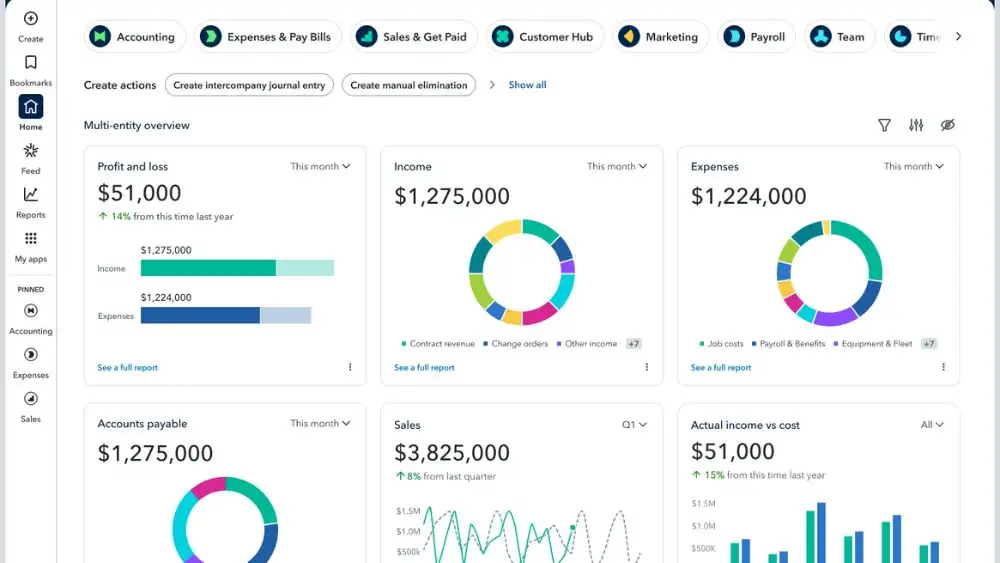
“For too long, mid-market finance teams have been forced to make critical decisions with fragmented data spread across disconnected systems,” said Ashley Still, GM and EVP, Small Business and Mid-Market, Intuit. “Intuit Enterprise Suite brings operational, financial, and workforce data together in one place, giving the office of the CFO real-time visibility and the confidence to move from closing the books to shaping what happens next.”
“Mid-sized businesses are often operationally complex, with multiple locations, diverse product lines, and layered organizational structures,” said Mickey North Rizza, Group Vice President, Enterprise Solutions, IDC. “This positions them to benefit from the latest wave of AI-powered ERP solutions, especially those that automate workflows, improve financial visibility, enable faster decision-making, and are designed to scale without overwhelming internal teams.”
Enhancing Decision-Making with AI and Data Integration
Additionally, the company continues investing in cloud-based financial technologies. The firm is also concerned with providing scalable solutions to large enterprises. In addition, strategies for growth in the mid-market are based on real-time data analytics and automation capabilities. Therefore, businesses are capable of improving their efficiency and making better decisions. Finally, Intuit becomes more dominant within the domain of business intelligence and the financial software industry. The firm is able to keep pace with customer requirements through innovation. Overall, the implementation of artificial intelligence will lead to sustainable growth for mid-market companies.
“What I love about Intuit Enterprise Suite is the intercompany transactions,” said Emily Most, VP of Finance and Administration, Certified Industrial Partners. “Not only does our team get to save about 10 hours a week, but we were able to allocate that responsibility across multiple team members because it doesn’t take as much accounting experience to complete.”
“We made six acquisitions in 18 months,” said Josh Daneshforooz, CEO, Lango. “With Intuit Enterprise Suite, we don’t have to switch systems every new business integrates seamlessly. That’s a game changer.”
“Access to all the data and intelligence helps point us to things we could be missing,” said Ed Sutton, Owner and CFO, MDR Realty, LLC. “This is the game changer.”
“With IES, it allows us to drill down,” said Brandon Webster, Director of Finance, PULSEROLLER. “Ownership can see a better snapshot of how the company in total is doing, providing the visibility needed to see truly profitable primary business lines versus R&D expenditures.”
“One of the biggest roadblocks for a CFO in construction is visibility,” said Scott Franchini, Partner, RedHammer. “You may not know whether a job is profitable until the project is already over. What IES brings to the table is the ability to quickly see budgets, actuals versus budget, billings, and gross profit on a specific project.”
Explore Finance Tech News for the latest innovations in financial technologies and expert insights shaping the future of digital finance!
News Source: Businesswire.com